How to Get Moonlight Sonata MIDI Free — Piano Guide
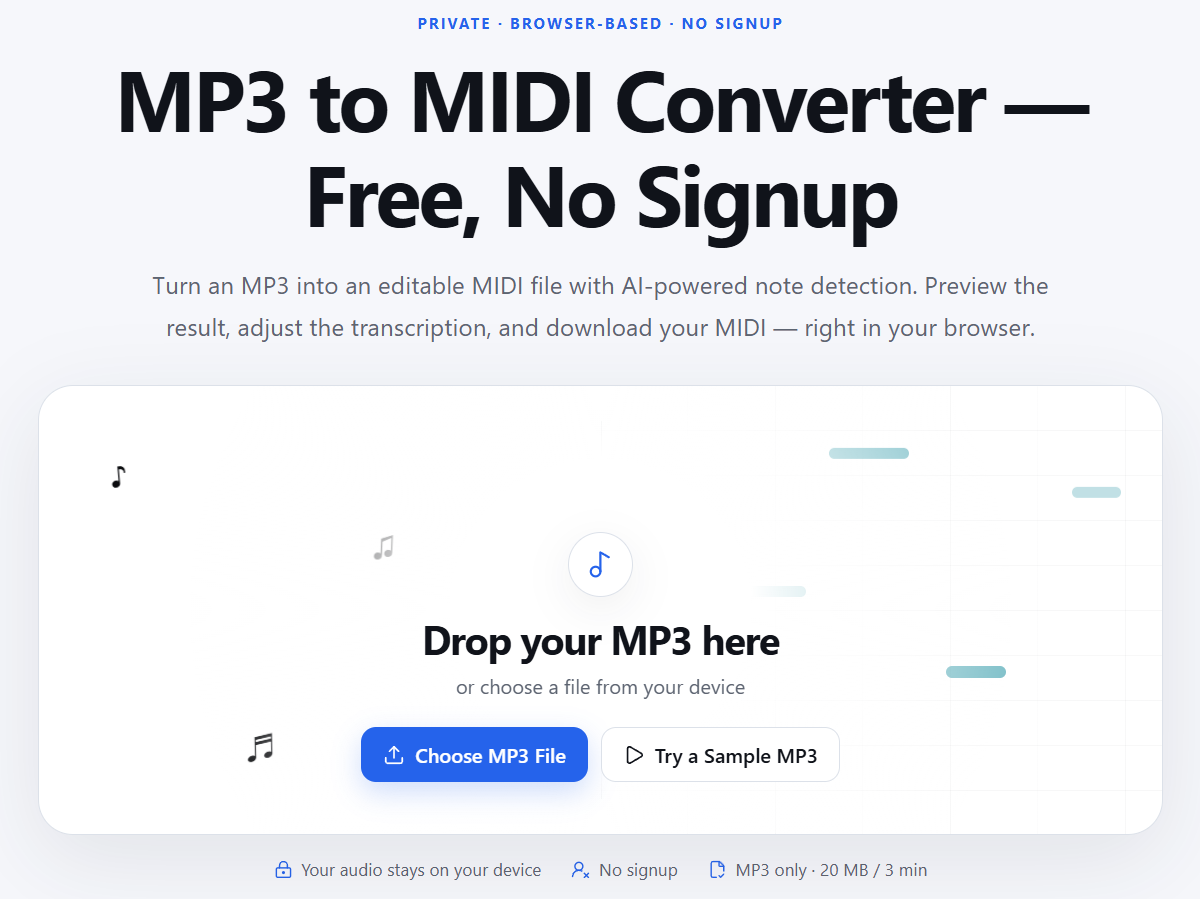
Download Moonlight Sonata MIDI files for all three movements — free, no signup required. Upload your MP3 of Beethoven's famous piano sonata, select "Piano" as the audio type, and our browser-based AI converts it to editable MIDI. Your audio never leaves your device.
Last updated: August 3, 2026
What is Moonlight Sonata?
Moonlight Sonata, officially known as Piano Sonata No. 14 in C-sharp minor, Op. 27, No. 2, is one of Ludwig van Beethoven's most famous and beloved piano compositions. Composed in 1801 and dedicated to his pupil Countess Giulietta Guicciardi, this masterpiece has captivated audiences for over 200 years.
The nickname "Moonlight" came from German music critic Ludwig Rellstab's 1832 description of the first movement as resembling "moonlight shining on Lake Lucerne." Whether you're looking for Moonlight Sonata MIDI for the 1st movement's gentle arpeggios or the 3rd movement's dramatic fury, our converter handles all three movements with precision.
The Three Movements of Moonlight Sonata
Moonlight Sonata consists of three distinct movements, each with its own character and technical demands. Understanding these differences helps you get the best Moonlight Sonata MIDI conversion results.
1st Movement: Adagio sostenuto
The most famous movement — slow, melancholic, with continuous triplet arpeggios in the right hand over a deep bass. Perfect for Moonlight Sonata 1st movement MIDI conversion.
2nd Movement: Allegretto
A brief, graceful interlude between the two outer movements. Light and dance-like, providing contrast to the drama around it.
3rd Movement: Presto agitato
The most technically demanding movement — fast, furious, with rapid arpeggios and powerful chords. Ideal for Moonlight Sonata 3rd movement MIDI conversion.
How to Get Moonlight Sonata MIDI
Getting Moonlight Sonata MIDI files is simple with our browser-based converter. Unlike other services that require registration or payment, our tool is completely free and runs entirely in your browser — perfect for creating accurate piano MIDI from Beethoven's masterpiece.
Whether you need Moonlight Sonata MIDI piano for the 1st movement's gentle arpeggios, or the dramatic 3rd movement for advanced practice, our AI model captures the nuances of classical piano performance. You can also find shared Moonlight Sonata MIDI files on community sites, but creating your own ensures you get exactly the interpretation you want.
Key Features
Piano-Optimized
Our AI model is trained on classical piano music, ensuring accurate conversion of Moonlight Sonata's nuanced dynamics and pedaling effects.
Privacy-Safe
All processing happens in your browser. Your audio files never leave your device — perfect for creating Moonlight Sonata MIDI files.
Built-in Editor
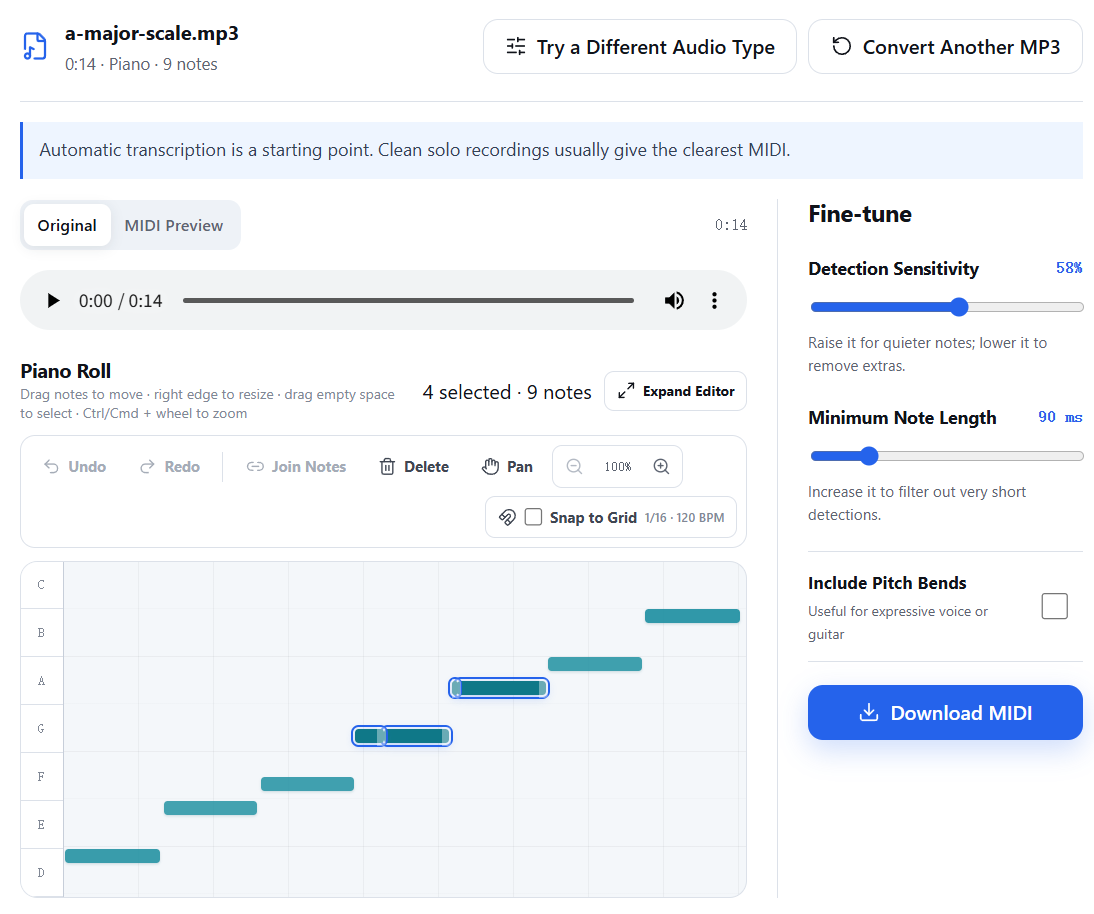
Edit your MIDI after conversion with our piano roll editor. Adjust notes, change instruments, and modify tempo as needed.
Fast Conversion
Most tracks convert in 30-60 seconds. No waiting in queues or downloading software for your Moonlight Sonata MIDI.
All Movements
Convert any or all three movements of Moonlight Sonata. Our converter handles both the slow 1st movement and the fast 3rd movement accurately.
100% Free
No signup to convert, no watermarks. Converting is free — new visitors get 1 free download, verified accounts get 1 more.
5-Step Conversion Guide
Follow these simple steps to convert your Moonlight Sonata audio to MIDI:
Upload Your Audio File
Click the upload area or drag and drop your MP3/WAV/FLAC file of Moonlight Sonata. Our converter supports all major audio formats.
Select Audio Type
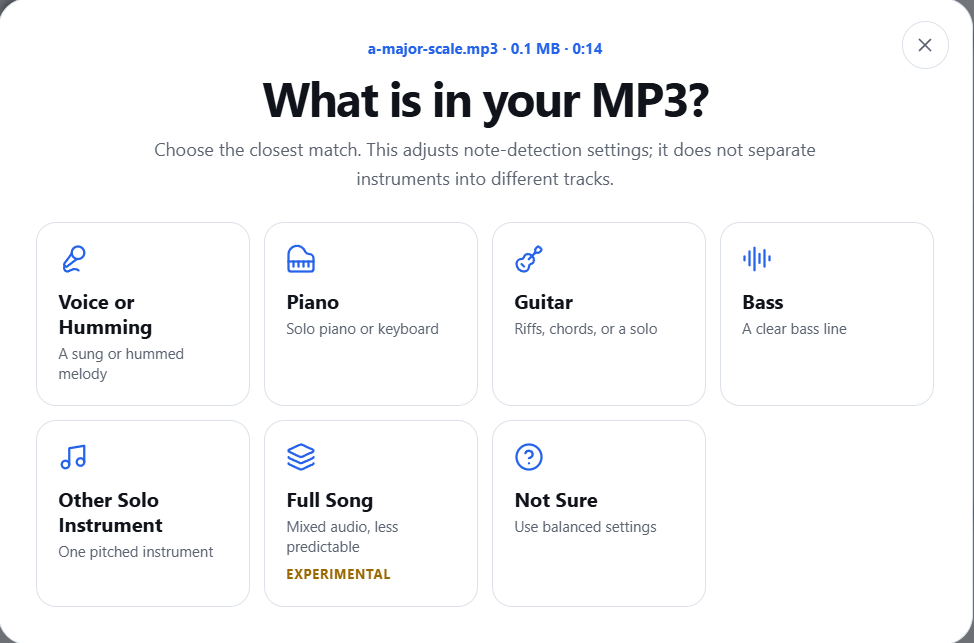
Choose "Piano" to extract the piano melody, or "Full Song" if your recording includes orchestral accompaniment. For solo piano recordings, "Piano" works best.
Start Conversion
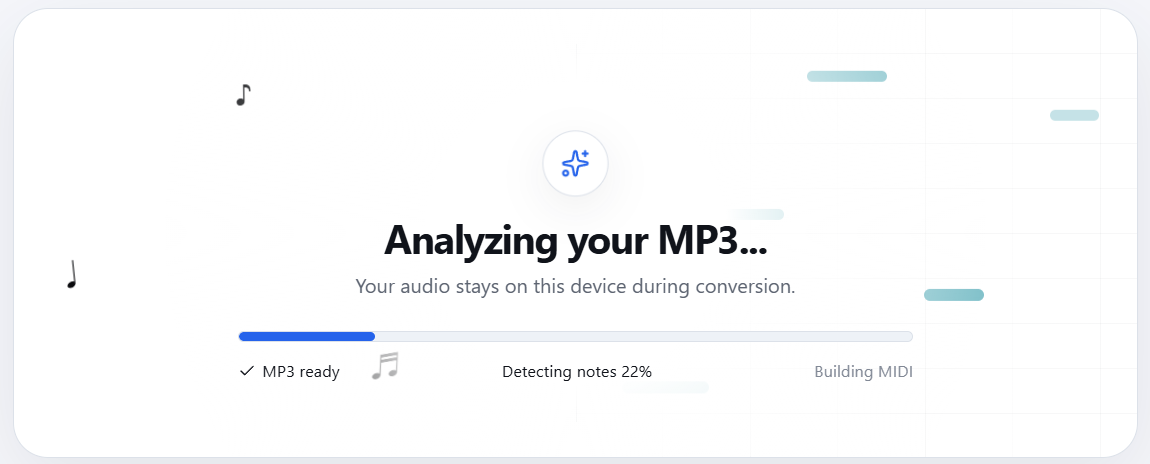
Click "Convert" and let our AI model process your audio. The conversion typically takes 30-60 seconds for Moonlight Sonata movements.
Preview and Edit
Use our built-in piano roll editor to preview your MIDI. Adjust notes, modify tempo, or fine-tune the dynamics as needed.
Download MIDI File
Once you're satisfied with the result, click "Download" to save your Moonlight Sonata MIDI file to your device. Use it for practice, performance, or further editing!
Tips for Best Results
Beyond the Download: Working With a Moonlight Sonata MIDI
Moonlight Sonata is one of the most-transcribed piano works ever, and its three movements are very different from each other — the Adagio is slow and calm, the Allegretto is lighter, and the Presto agitato is a rapid, rolling torrent. Here is what to expect once your MIDI is ready, movement by movement.
What a Moonlight Sonata MIDI Usually Contains
A clean transcription is essentially a solo piano file: a single track with the melody (top voice) sitting above the accompaniment (the famous triplet pattern in the 1st movement, or the arpeggios in the 3rd). If you open the piano roll you will see a dense chordal texture rather than separate instrument tracks — that is normal for a piano piece.
Three Real Tips That Help
- Expect and tame the triplet texture. The 1st movement's repeating triplet chords are busy; if any ghost note appears in an inner voice, delete it to keep the left-hand pattern clean.
- Handle the 3rd movement at reduced speed. The Presto agitato at its real tempo is hard for any model. Speed the file down while reviewing, fix the note edges, then re-assign the true tempo.
- Separate hands if you want to practice. After conversion you can split the top voice (right hand) from the accompaniment (left hand) as two tracks for isolated practice.
A Realistic Expectation
Solo piano is the best case for transcription, so the gentle Adagio and the Allegretto come out very clean. The fast 3rd movement is the realistic weak spot — dense, rapid arpeggios may blur a few notes that are easy to correct with the editor rather than re-running the whole conversion.
FAQ
What is Moonlight Sonata?
Moonlight Sonata (officially Piano Sonata No. 14 in C-sharp minor, Op. 27, No. 2) is one of Beethoven's most famous piano compositions, composed in 1801. It has three movements: the famous Adagio sostenuto (1st movement), Allegretto (2nd movement), and the dramatic Presto agitato (3rd movement).
Can I get Moonlight Sonata MIDI for all three movements?
Yes! Our converter can process audio files of any movement. Simply upload your MP3 of the 1st, 2nd, or 3rd movement, and our AI will convert it to editable MIDI format. You can also convert complete recordings with all movements.
Is the Moonlight Sonata MIDI conversion free?
Yes, converting is free! No signup, no payment, no watermarks — our browser-based converter processes your audio locally, ensuring your files never leave your device. You start with 1 free download, and verifying your email adds 1 more.
What's the difference between the 1st and 3rd movement MIDI?
The 1st movement (Adagio sostenuto) is slow, melancholic, and features arpeggiated triplets — perfect for beginners. The 3rd movement (Presto agitato) is fast, dramatic, and technically demanding with rapid arpeggios and powerful chords. Our converter handles both styles accurately.
Can I get piano-only MIDI for Moonlight Sonata?
Yes! Select the 'Piano' audio type during conversion to extract just the piano melody. This is ideal for Moonlight Sonata since it's originally a solo piano piece, ensuring clean and accurate MIDI output.
How accurate is the MIDI conversion for classical music?
Our AI model is trained on diverse musical genres including classical piano. For Moonlight Sonata, the conversion captures the nuanced dynamics, pedaling effects, and expressive timing that make this piece so distinctive.
Can I edit the Moonlight Sonata MIDI after conversion?
Absolutely! Our built-in piano roll editor lets you adjust notes, modify tempo, change instruments, and fine-tune the MIDI data. Perfect for correcting any conversion artifacts or customizing the arrangement.
What audio formats are supported for Moonlight Sonata MIDI conversion?
We support MP3, WAV, FLAC, AAC, OGG, and more. Simply upload your Moonlight Sonata recording in any common format, and our converter will process it into MIDI.
Is my audio file safe during conversion?
Yes! All processing happens entirely in your browser using our AI model. Your audio files never leave your device, ensuring complete privacy and security.
Ready to Get Moonlight Sonata MIDI?
Start converting your Moonlight Sonata audio to MIDI now — free, fast, and privacy-safe.